-
About us
![About us]()
-
Light Rail System
![Light Rail System]()
Kaohsiung Light Rail continues to set new ridership records. During the first half of 2026, total ridership surpassed 7.21 million passenger trips, averaging nearly 40,000 passengers per day and more than 1.2 million passengers per month, representing an 8.14% increase over the same period last year and the highest first-half ridership since operations began. The system has evolved from "taking the light rail for sightseeing" to "taking the light rail as part of everyday life," firmly establishing itself as a core component of the city's public transportation network.
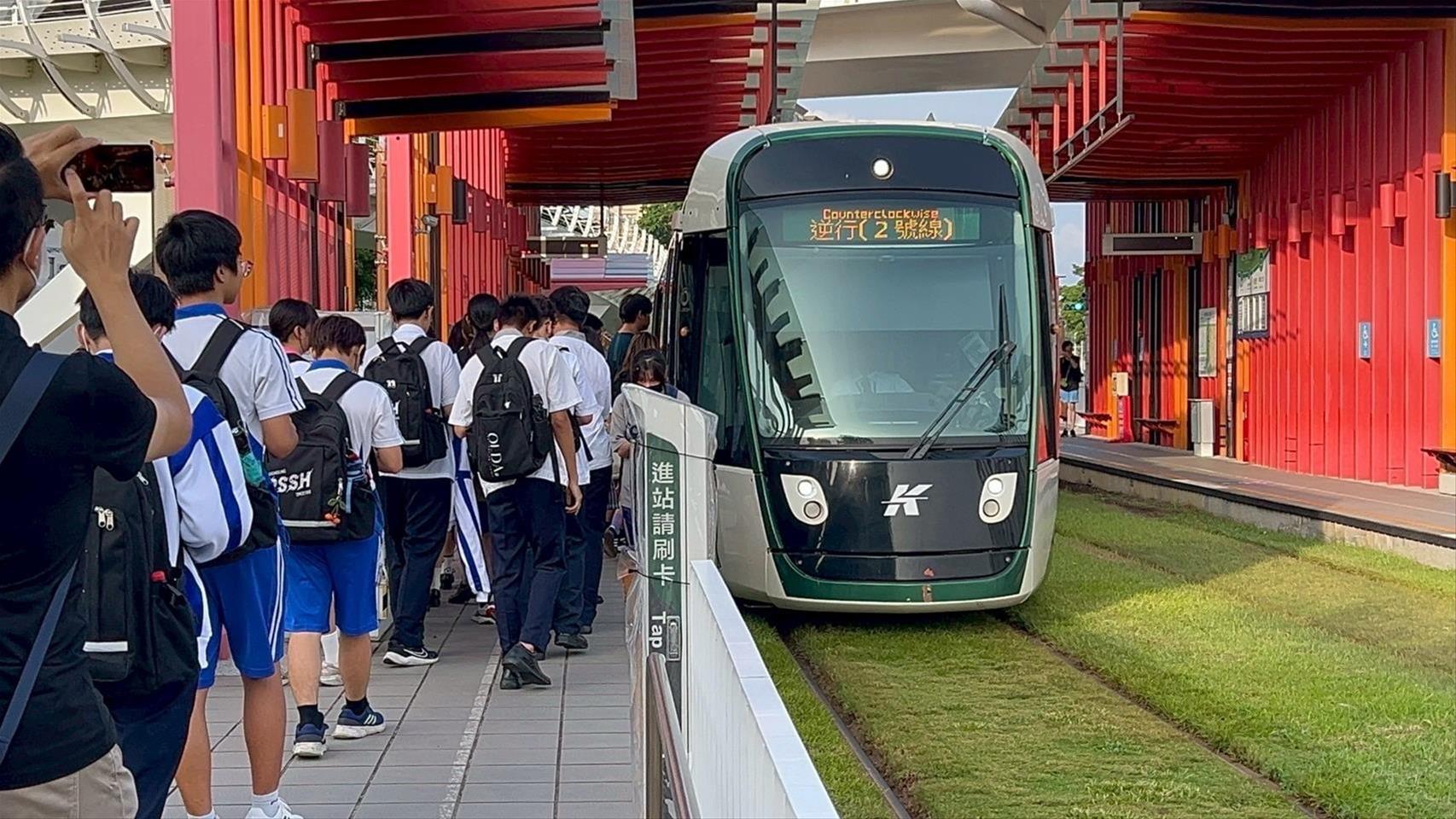
According to the Kaohsiung Mass Rapid Transit Bureau, smart card big data analysis shows that the five largest travel purposes—tourism and leisure, student commuting, medical visits, MRT transfers, and Taiwan Railways transfers—accounted for more than 6.3 million passenger trips during the first half of the year, representing nearly 90% of total ridership. The findings indicate that the light rail has grown beyond its original role as a tourist attraction to become an integral part of residents' daily routines, serving commuting, school travel, medical appointments, and rail transfers, while increasingly meeting the city's everyday mobility needs.
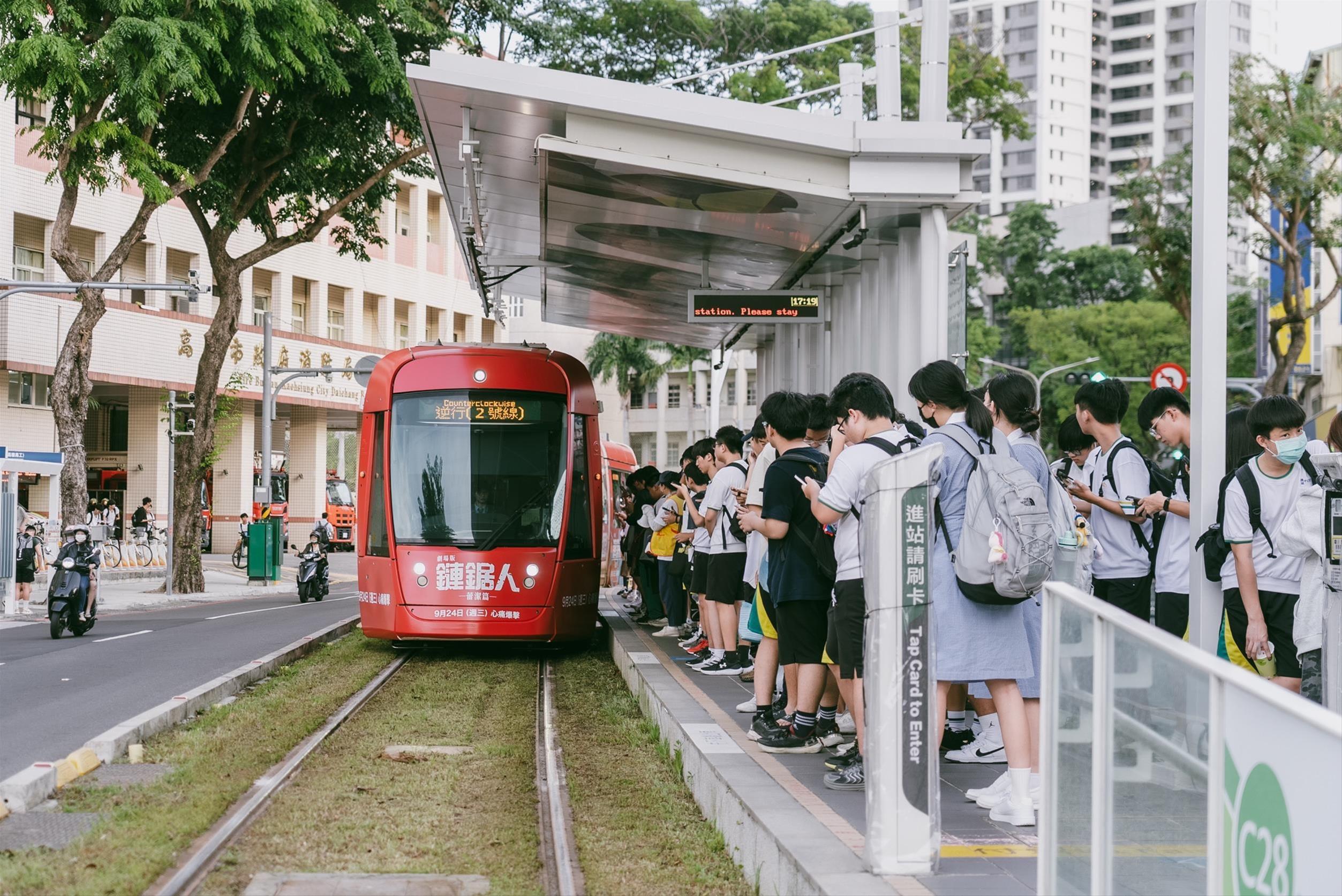
The MRT Bureau noted that ridership analysis also reveals a steadily growing base of regular users. Student commuting reached 1.47 million passenger trips, an 11.09% increase over the same period last year. Passenger trips to medical facilities, including Kaohsiung Municipal United Hospital, St. Joseph Hospital, and the Kaohsiung City Department of Health, totaled 420,000, marking a 14.39% increase, the highest growth rate among the five key travel categories. This reflects the growing preference among students, older adults, and medical patients for the light rail's smooth ride, low-floor vehicles, and barrier-free accessibility.
Meanwhile, tourism-oriented stations serving destinations such as Dream Mall, the Pier-2 Art Center, the Kaohsiung Port Cruise Terminal, and the Asia New Bay Area recorded a combined 2.31 million passenger trips during the first half of the year. Average weekend ridership reached 51,000 passengers per day, up 12.85% year over year. In February, major events including the Winter Amusement Park drove average weekend ridership above 53,000 passengers, once again demonstrating the mutually reinforcing relationship between major events and public transportation.
Rail Integration Continues to Strengthen, Creating a Seamless Urban Rail Network
As Kaohsiung's rail network continues to expand, the integration benefits between the Kaohsiung Light Rail, Kaohsiung MRT, and Taiwan Railways continue to grow. During the first half of the year, the three major MRT interchange stations—C3 Cianjhen Star, C14 Hamasen, and C24 Heart of Love River—recorded a combined 1.66 million passenger trips, with Heart of Love River Station once again ranking as the busiest station on the entire light rail network.
The three Taiwan Railways interchange stations—C18 Gushan, C20 TRA Museum of Fine Arts, and C30 Science and Technology Museum—handled 443,000 passenger trips during the same period. Together, the six key interchange stations recorded a total of 2.11 million passenger trips, an increase of 86,000 over the same period in 2025. According to the bureau, completion of the circular light rail line has effectively integrated the MRT and Taiwan Railways systems into a seamless and complementary rail network. The enhanced connectivity has not only improved transfer convenience and expanded the reach of public transportation, but has also established the rail network as a key mobility backbone supporting residents' daily lives.
Medical Travel Sees Fastest Growth While Student Commuting Remains Strong; Serving Daily Mobility on Weekdays and Tourism on Weekends
The MRT Bureau noted that continued development in the Asia New Bay Area, a steady stream of major events, and the opening of new commercial and public facilities, together with the completion of the circular light rail line connecting medical, educational, cultural, and commercial destinations, have not only generated new travel demand but also encouraged more residents to adopt the light rail as part of their daily routine. This has created a virtuous cycle in which urban development drives transit ridership while public transportation, in turn, supports further urban development. Among the five major travel categories, medical trips recorded the strongest growth at 14.39%, followed by weekend tourism trips at 12.85% and student commuting at 11.09%. These figures underscore the Kaohsiung Light Rail's dual role of supporting everyday mobility on weekdays while driving tourism on weekends.
According to MRT Bureau Director Wu Chia-chang, since completion of the circular light rail line, the network's benefits have continued to grow. Big data analysis shows that the Kaohsiung Light Rail has successfully evolved from a tourism-oriented transit service into the city's public transportation backbone, serving a wide range of travel needs including commuting, school travel, medical visits, rail transfers, and tourism. It has also become a vital piece of infrastructure supporting low-carbon mobility and Kaohsiung's transition toward a net-zero city.
Looking ahead, the MRT Bureau will continue working with the Kaohsiung Rapid Transit Corporation to further enhance service quality and improve transfer facilities among the MRT, light rail, and Taiwan Railways systems. The goal is to build a rail network that is safer, more convenient, lower in carbon emissions, and accessible to people of all ages, making public transportation the preferred choice for daily travel while further strengthening Kaohsiung's competitiveness as a highly livable city.